Bedding · Infant sleep safety
A Safer, More Comfortable Crib: What to Know About Organic Sleep Surfaces
An infant’s mattress should be chosen for safety first, fit second, and material preference after that. Organic fibers can appeal to families seeking clearer information about what touches the sleep space, but labels alone cannot make a crib safer. The essential questions are practical: Is the mattress intended for this crib? Is it firm and flat? Does it fit snugly? And can you verify what it is made of and how it should be used?
A considered guide to crib mattress fit, firmness, construction, certifications, and care.
Begin with the sleep space, not the label
In a nursery, the mattress can become an object of close attention: its cover, filling, origin, and feel all invite scrutiny. Yet the safest choice is not necessarily the one with the most appealing natural-material story. For an infant, the sleep surface must meet current safety requirements and work as intended with the crib. A beautifully described fabric or filling cannot compensate for a mattress that is too soft, damaged, incorrectly sized, or paired with unapproved accessories.
Current safe-sleep guidance from organizations such as the American Academy of Pediatrics and the U.S. Consumer Product Safety Commission emphasizes a firm, flat sleep surface designed for infant use. The baby should be placed on their back on that surface, with only a tightly fitted sheet. Keep pillows, blankets, quilts, stuffed toys, positioners, and other soft objects out of the crib. These recommendations apply whether a mattress is conventional, organic, or made with a mixture of materials.
“Organic” describes aspects of material production or processing, depending on the particular standard and certification. It is not a synonym for “safer for every baby,” nor does it certify that a mattress is appropriate for every crib or sleep situation. Treat the term as one part of your comparison—not as a substitute for the product’s specifications, safety information, or your pediatrician’s advice.
Firmness and flatness are not finishing touches
A crib mattress should feel firm and lie flat. Firmness in this context is a safety characteristic, not a promise of adult-style comfort. An infant’s sleep surface should not contour deeply around the head or body. Avoid using an adult mattress, sofa, cushion, or other improvised surface in place of a mattress specifically intended for the crib or bassinet.
When reviewing a product, look for clear language identifying it as an infant or crib mattress and for information about the applicable safety standards. Follow the manufacturer’s instructions for the mattress and the crib, including any guidance about which side to use, how to install it, and when to adjust the crib’s mattress support as the child grows. If the product’s intended use or safety information is unclear, ask the manufacturer before using it.
Do not try to change the feel of a crib mattress with an added topper, pillow, folded blanket, foam layer, or extra cushioning. A separate comfort layer can alter the surface and may create an unsafe sleep environment. The same caution applies to products marketed as plush, soothing, supportive, or temperature regulating: attractive claims do not override established safe-sleep guidance.
For a newborn, the goal is not to make the crib resemble a miniature adult bed. It is to provide a firm, level, uncluttered surface. If a baby has a medical condition or a clinician has recommended a different arrangement, seek individualized guidance from the child’s health care professional rather than adapting the mattress independently.
A snug fit is a basic safety check
Even a mattress with the right materials and a suitable firmness can be the wrong choice if it does not fit the crib. The mattress should fit snugly within the crib’s frame, with no hazardous gaps around the edges. Use the mattress size specified by the crib manufacturer, and check the assembled crib and mattress together rather than relying on a product name or a general assumption about “standard” sizing.
Dimensions matter, but the frame and mattress must also be compatible in practice. A crib may have particular requirements for mattress thickness, support type, or dimensions. Consult the crib’s manual and the mattress instructions before purchase and again during setup. If you are buying secondhand, ask for the model information and manuals where available, inspect the condition carefully, and confirm that the product has not been recalled. Missing paperwork is a reason to pause and verify—not a reason to guess.
Once the mattress is in place, check that it sits evenly on its support and cannot shift in a way that leaves a gap. Use a fitted sheet made for the mattress dimensions; it should stay securely in place without bunching or pulling loose. A sheet that is oversized, stretched, or poorly fitted can undermine an otherwise careful setup. Follow the crib manufacturer’s directions for mattress-support height and adjustment, and make sure the support is installed as instructed.
Fit is not a one-time consideration. Recheck the sleep surface after moving the crib, changing the mattress-support position, replacing a sheet, or noticing that the mattress has shifted or changed shape. A used mattress that looks clean may still be damaged, poorly fitting, or incompatible. Inspect seams, edges, cover integrity, and structural condition, and follow current safety advice when deciding whether a used sleep surface is appropriate.
Understanding organic materials without overreading the claim
Organic crib mattresses may use cotton fabrics or batting, wool, latex, or combinations of materials. Each has different properties, and the word “organic” does not tell you by itself how the mattress is constructed, how firm it feels, how it should be cleaned, or whether every component has been certified. Read the full materials list and ask what the description means for the finished product.
Natural fibers can be valued for their feel, breathability, or sourcing. Cotton is commonly used in covers and padding; wool may be used in some constructions for its fiber characteristics; latex is a distinct material with its own production and processing details. None should be treated as automatically suitable for every infant or as a replacement for checking the mattress’s intended use and fit. A baby with allergies, skin sensitivity, or a specific medical concern may need individual advice from a health professional.
Be attentive to precise wording. “Natural,” “chemical-free,” “non-toxic,” and “eco-friendly” can be broad marketing terms unless the maker explains what they refer to. Ask whether a claim concerns the fiber’s agricultural origin, the textile processing, a particular component, or the complete mattress. A transparent manufacturer should be able to describe the layers, identify the materials used, and explain relevant testing and care requirements without relying solely on soothing adjectives.
Some mattresses have two sides intended for different stages, while others are designed for use on one side only. Do not infer that a dual-sided mattress is appropriate for an infant simply because one face is described as firmer. Use the infant-designated side only when the manufacturer’s instructions explicitly identify it for that purpose, and follow the crib and mattress guidance throughout use.
What certifications can—and cannot—tell you
Third-party certifications can make material claims easier to assess, but their scope varies. A certificate may apply to a fiber, a textile-processing chain, a component, or a finished product. It may address organic sourcing, restricted substances, or environmental and social criteria. Those are meaningful distinctions: a certified cover does not necessarily mean that every layer of the mattress is certified, and a certificate focused on materials is not a substitute for a product safety standard.
Look for the name of the certifying organization and the exact scope of the claim. Check whether the certificate applies to the finished mattress or only to selected components, whether the product is listed in the certifier’s public directory, and whether the certificate is current. When a company uses a certification logo, the details should be available in its product information or on request. If the only explanation is a vague phrase such as “certified organic,” ask which standard and which materials it covers.
Separate material credentials from infant-product safety. A mattress can have responsibly sourced materials and still be unsuitable for a particular crib, too soft, damaged, or used with an unsafe accessory. Conversely, a product’s lack of an organic label does not by itself establish that it fails safety requirements. Compare the verifiable details relevant to your priorities, and keep the core safety checks at the center.
Certifications are best understood as tools for informed comparison, not as a promise of perfect performance or a universal health outcome. Avoid assuming that an organic label prevents allergies, eliminates all emissions, or guarantees better sleep. The strongest product information is specific, modest in its claims, and supported by documentation.
Construction, care, and the everyday reality of a crib
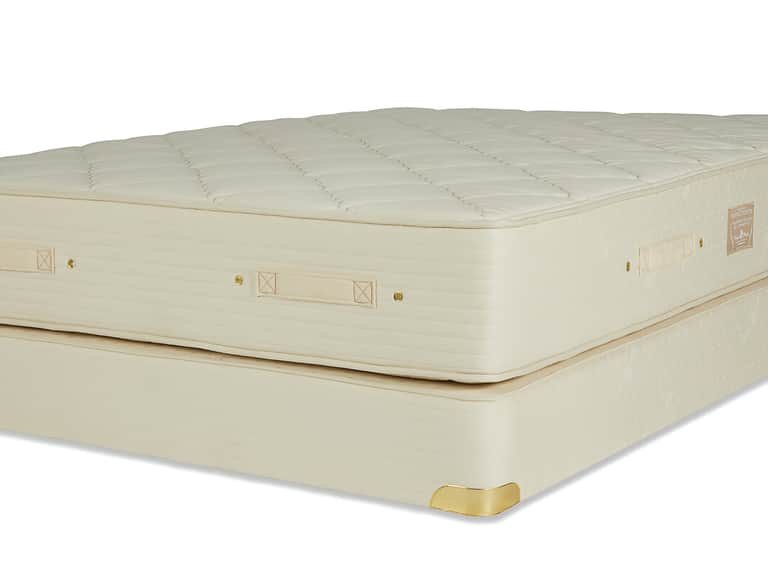
A mattress is a layered object, and its construction affects more than its marketing story. Ask what the core is made of, what sits around it, how the cover is attached, and whether the mattress is intended to be cleaned in a particular way. A removable cover may sound convenient, but it must be used exactly as directed and should not be replaced with an ill-fitting cover or additional padding.
Care instructions deserve the same attention as material descriptions. Some products permit limited spot cleaning; others have specific instructions for spills or moisture. Follow the manufacturer’s directions rather than soaking, steaming, or applying household treatments without confirmation. Moisture left inside a mattress can cause damage, while unapproved cleaning products may affect materials or finishes. If the mattress becomes wet, contaminated, torn, or structurally compromised, consult the manufacturer about whether it remains suitable for use.
Consider the household routine, too. A practical sleep space is one that can be maintained without improvisation. Have a correctly sized fitted sheet ready and follow current guidance for keeping the crib clear. Do not place a waterproof cover, pad, or protective layer on the mattress unless the crib and mattress manufacturers explicitly permit that specific product and its use remains consistent with infant safe-sleep guidance. A protective accessory should never introduce softness, looseness, or an uncertain fit.
Durability claims also deserve context. A mattress’s expected lifespan depends on construction, use, care, and the condition of the crib. Do not assume that a product remains appropriate indefinitely because it was expensive or made from durable materials. Inspect it regularly, keep purchase and model details, and check for safety notices or recalls. When replacing a mattress, reassess dimensions and compatibility rather than assuming the new model will fit the old crib in the same way.
A calm, practical way to compare options
Shopping can become complicated when every product promises purity, comfort, cooling, or peace of mind. A short sequence of questions keeps the decision grounded. First, confirm that the mattress is designed for infant use and that its safety information is clear. Second, verify compatibility with the specific crib, including dimensions and any limits on mattress thickness. Third, assess its condition, firmness, and flatness. Only then compare the material composition, certifications, care requirements, and price.
- Does the crib manufacturer specify a mattress size, type, or thickness?
- Is the mattress explicitly intended for a crib or infant sleep space?
- Does it fit snugly and lie flat, with no visible damage or unsafe gaps?
- Are the materials and construction described clearly and specifically?
- What does each certification cover, and can the claim be verified?
- Are care instructions realistic and compatible with the way the mattress will be used?
- Can you use the mattress with only a properly fitted sheet, without adding a topper or cushion?
Price and appearance may also matter to a family, but neither is a proxy for safety. A higher price does not guarantee a better fit or more appropriate construction, and a natural-material claim should not crowd out basic checks. The best comparison is one that separates non-negotiable safety requirements from personal preferences. If two options both meet the practical criteria, preferences about materials, sourcing, and care can help guide the final choice.
The complete sleep environment matters
A crib mattress is one part of a broader sleep arrangement. Place the baby on their back for every sleep, on a firm, flat surface intended for infants, with no loose bedding or soft objects. Keep the crib uncluttered and use products only for the purpose and age described by their manufacturers. Do not use inclined sleepers or positioners as substitutes for a flat, firm sleep surface. If a baby falls asleep elsewhere, follow current safe-sleep guidance for moving them to an appropriate sleep space.
Room temperature, clothing, and the baby’s health can influence comfort, but they do not justify adding blankets or soft layers to the crib. Follow pediatric guidance about appropriate sleep clothing and signs of overheating. For concerns about temperature, reflux, breathing, allergies, or a medical condition, speak with a pediatrician; avoid trying to solve the problem by changing the mattress setup on your own.
Safe-sleep recommendations can be updated, and local rules may differ. Consult current guidance from recognized public-health and pediatric authorities, as well as the crib and mattress manufacturers. If you are uncertain about a product’s safety, fit, or use, ask a qualified professional before placing it in an infant’s sleep space.
A thoughtful choice is a clear one
Choosing an organic crib sleep surface can be part of a family’s wider approach to materials and purchasing. The most reassuring product is not necessarily the one with the longest list of claims; it is the one whose intended use, dimensions, construction, certifications, and care instructions can be understood and verified. Start with a firm, flat surface and a snug fit. Keep the crib free of add-on cushioning and soft accessories. Then decide whether particular fibers or sourcing standards are priorities for your household.
That order gives the decision its proper proportion. Organic materials may answer questions about how certain components are made, but safe sleep depends on the whole setup and on following current guidance. With careful attention to fit, firmness, and transparent product information, families can make a practical choice without confusing a premium label with a safety guarantee.